
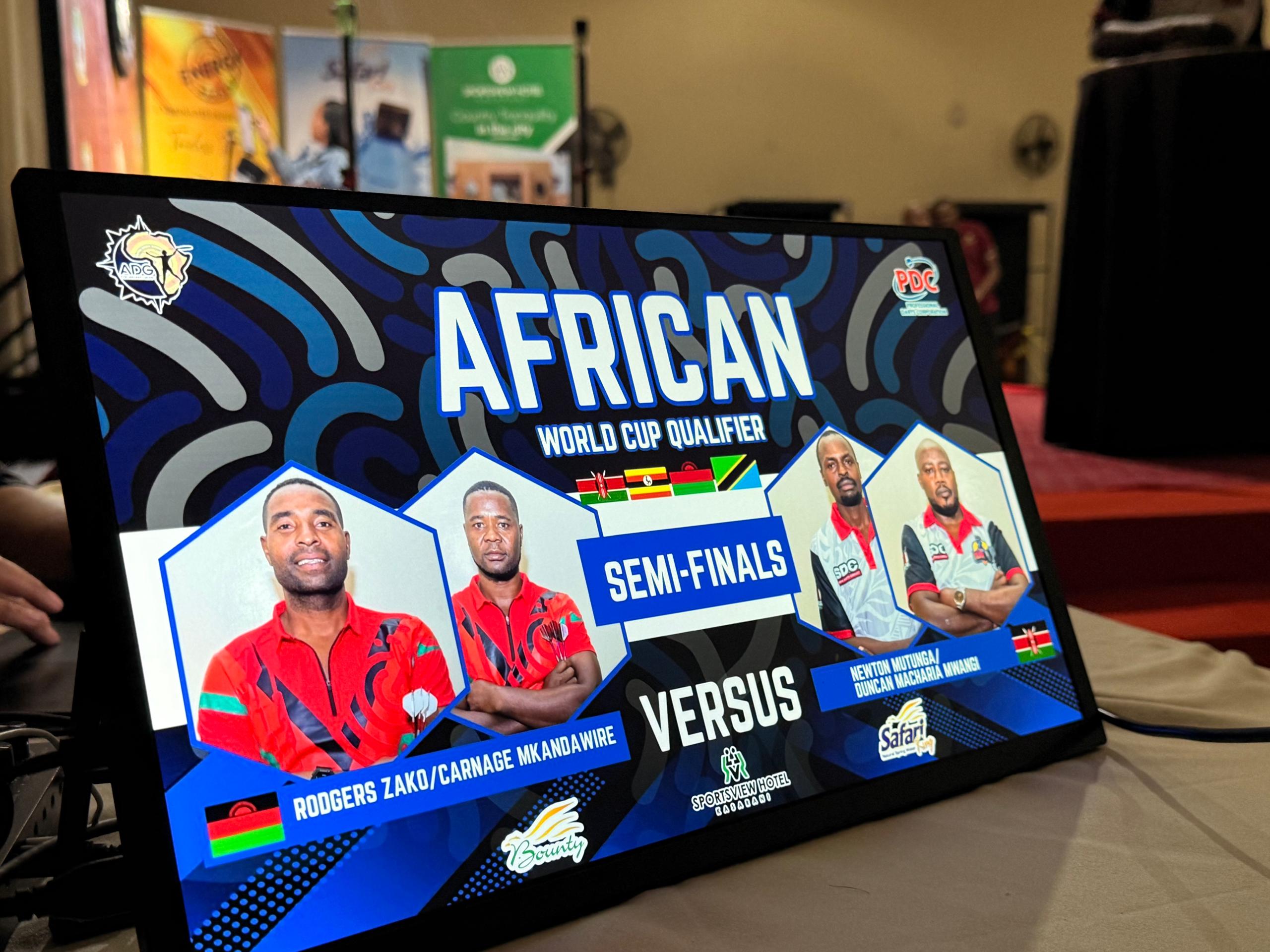
Malawi’s national darts team came back from Nairobi with silver. That is the headline. It is clean, impressive, and easy to celebrate. But it is not the full story. Because silver, in this case, carries tension. It speaks of success, yes, but also of proximity. Of something within reach that slipped, not by a wide margin, but by moments. Small, stubborn moments that define elite sport. At the World Darts Federation Africa Qualifiers, the Darts Association of Malawi did not arrive as spectators. They arrived ready. And for long stretches, they looked like a team that belonged exactly where they were.
Numbers That Tell Two Stories
Start with the surface. Carnage Mkandawire posts a 66.53 average, with a striking 73.08 first-nine. Rodgers Zako sits just behind at 64.50, with a strong 70.29 first-nine of his own. Simeon Kaonga and Otiyela Mtema hold steady above the high 50s and low 60s. This is not accidental scoring. This is structure. This is intent. Push a little deeper and the pattern shifts. Finishing tells a quieter story. Checkout averages hover between 32 and 43 percent across key players. Competitive, yes. But not decisive. Not yet. And that is where matches turn. Not in the heavy scoring. Not in the rhythm of the throw. But in the pause before the double. In the moment where control tightens or slips. In the difference between pressure absorbed and pressure returned. Malawi scored well. Malawi competed well. Malawi did not always finish well enough. That distinction matters more than anything else in Nairobi.
A Team That Refused to Be Peripheral
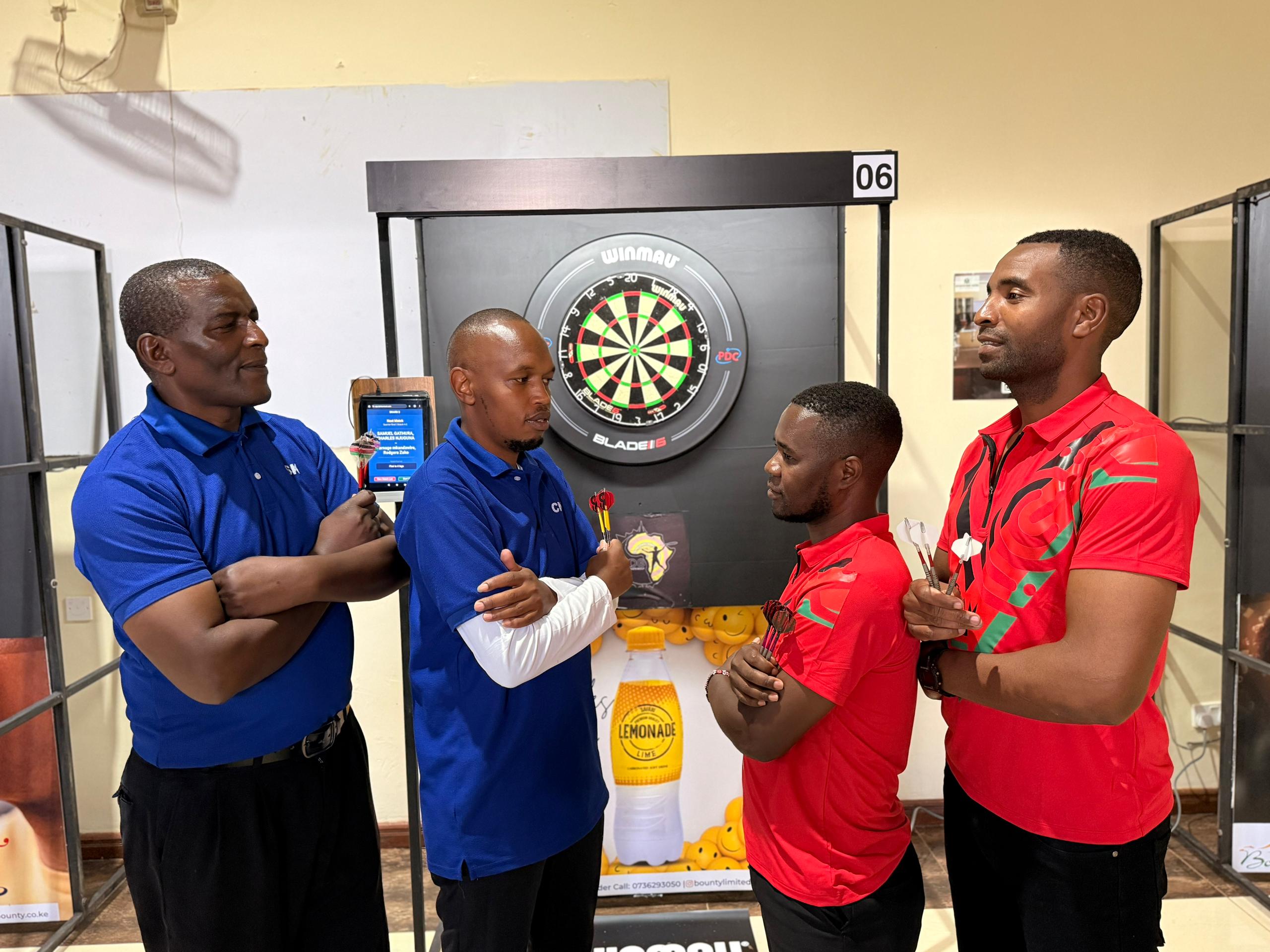
There is something else that deserves attention. Presence. Malawi did not look like a team overwhelmed by the occasion. There was shape to their play. A sense of internal belief. The kind that does not always show up in numbers but reveals itself in how players carry themselves between throws, between legs, between setbacks. Top 32 finishes in the Open Singles. A finals appearance in the doubles through Rodgers Zako and Carnage Mkandawire. A Top 16 run from Simeon Kaonga and Steve Kamfose. These are not flukes. They are patterns forming. It suggests a team that is no longer circling the edges of continental competition. It is stepping into it, testing it, pushing against it.
The Uncomfortable Gap
And yet, for all of this, qualification did not come. This is the part that should not be softened. Because the gap is no longer theoretical. It is visible. It sits in the data, in the missed finishes, in the sequences that almost held but did not. It is close enough to be frustrating, and clear enough to be instructive. That combination is dangerous in the right way. It removes excuses. You cannot say Malawi is not good enough. The performances reject that. You cannot say the stage was too big. The composure rejects that. What remains is harder to ignore. Malawi is close. And closeness demands precision.
A Shift in Identity
Something shifted in Nairobi. Before this, Malawi darts could speak in terms of potential. Of growth. Of building. That language still exists, but it is no longer sufficient. Now there is evidence. Evidence of scoring power. Evidence of competitive depth. Evidence that the gap to the top is not structural, but situational. This changes the expectations. It also changes the responsibility. What Silver Really Means Silver, in this context, is not a soft landing. It is a sharp message. It says the foundation is there, but the edge is missing. It says the system is forming, but not yet refined. It says the players can compete, but must learn to close. And closing is not instinctive. It is trained. Repeated. Pressured. Simulated until it becomes automatic under the weight of expectation. That is the next layer. The Moment After the Moment The real significance of Nairobi will not be measured by the medal. It will be measured by the response. Does this become a proud memory, revisited and celebrated? Or does it become a reference point, studied, broken down, and used as a blueprint for what must change? Because silver creates a choice. To admire the distance covered. Or to confront the distance remaining. Malawi darts now stands in that space. Not far. Not finished. Not satisfied. And that, more than the medal itself, is what makes Nairobi matter.